

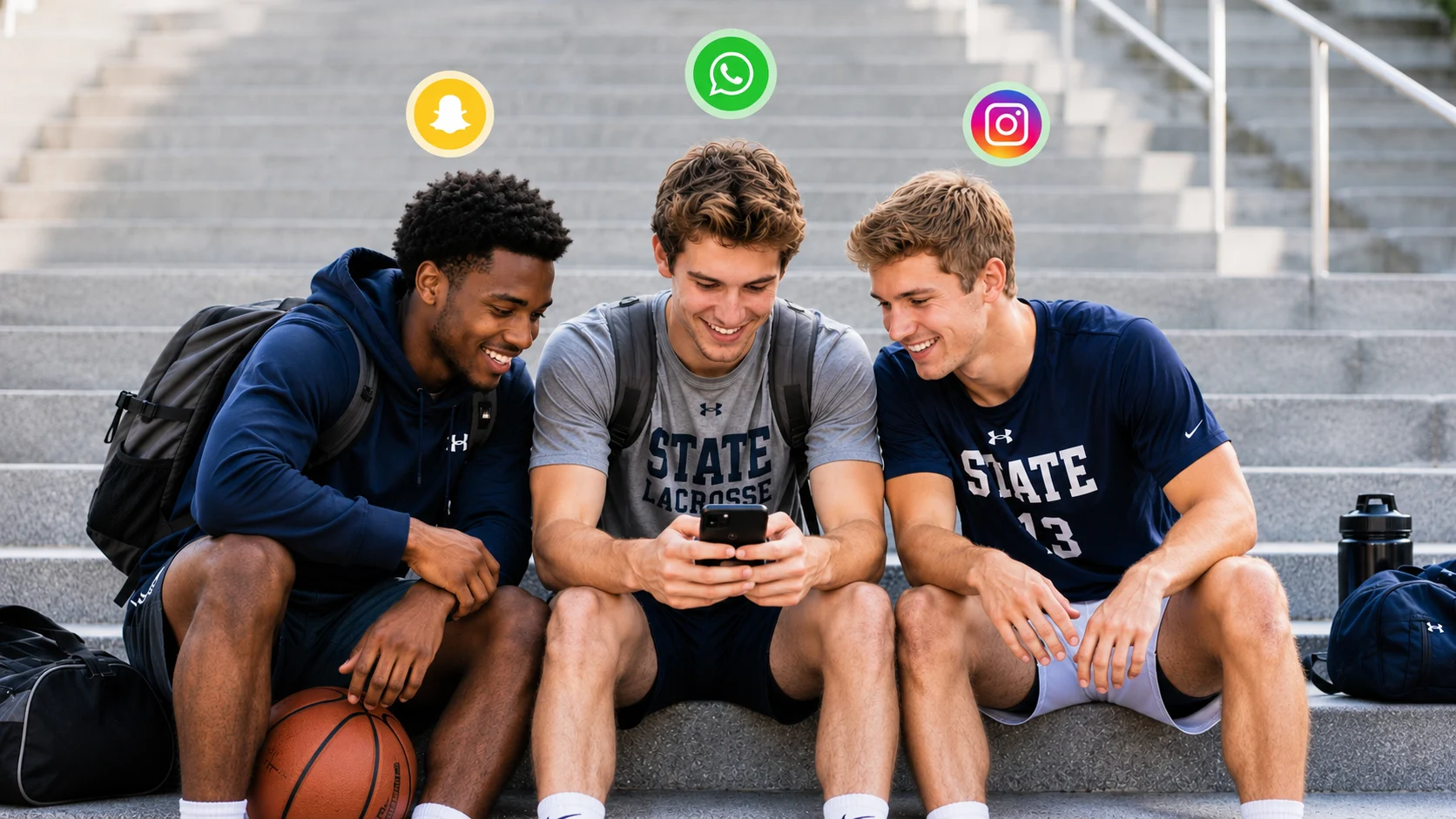
Social media has changed the entire scenario of college recruiting. A huge part of their evaluation happens long before they ever send you an email, and learning how to use social media for college recruiting is now just as important as learning a new play. What you post, share, and comment on shapes a first impression that can either open a door or quietly close it.
So, when families ask for advice, the answer is simple: treat your profiles like a professional highlight window, not a personal diary.
This blog will walk you through a practical framework for how to use social media for college recruiting effectively.
Why Social Media Matters in Recruiting
The student-athletes who truly understand how to use social media for college recruiting often get on a coach’s radar faster.
Coaches want to know three things about every student-athlete:
- How you perform
- How you carry yourself
- How you would fit their team culture
When you figure out how to use social media for college recruiting, your posts do more than update; they highlight the work behind the highlight. Many coaches now check out an athlete’s profile before responding to an email, reviewing film, or adding a name to their recruiting list.
That’s why every post, comment, and story needs intention. When used correctly, your online presence can support everything you’re working toward, even a future student-athlete scholarship through trusted sports recruiting services or strong college recruiting services like Insight-Athletics.
The Do’s: What Every Student-Athlete SHOULD Do
1. Turn Your Profile into a Recruiting Resume
Your profile should answer the basic questions every coach has:
- Short Statement
- Video Highlights
- Physical details
- Competitive background – any awards/press
- Competition schedule
- Sport stats/performance metrics
- Academic details
- Coach recommendations
- Relevant family background
- Other activities, sports, community service details
- Parent/student-athlete contact info
A clean, thorough bio immediately tells a coach they’re looking at an organized athlete who understands the process.
2. Post Frequent, Excellent Highlights
Your feed should display:
- Parts of the game that are uniquely strong
- Workouts
- Improvement of abilities
- Gains in physical fitness and strength
- Academic accomplishments
Instead of focusing on a single exceptional game, coaches want to examine your performance over time.
3. Display Personality Off the Field
Your personality and mindset are very important to coaches. You may draw attention to:
- Moments of leadership
- Volunteering
- Awards
- Success in the classroom
- Interactions inside the team
Coaches can better understand how you might fit into their culture by reading these topics. This helps coaches visualize how you’d contribute to their program’s culture, a key part of what strong college recruiting services prepare you to communicate.
4. Engage with a Purpose
Act in a way that makes a positive impression:
- Express gratitude to teammates in public.
- Congratulate the other players.
- Share your team’s success.
- Respond courteously to messages and comments
Professional communication on the internet is an indication of maturity.
5. Maintain Clean Accounts
Prior to a coach looking at your profile, consider:
If someone offered me a scholarship, would I show them this post?
If the answer is no, remove it.
Also Read: How to Create a Highlight Video That Gets College Coaches’ Attention
The Don’ts: What Student-Athletes MUST Avoid
1. Don’t Post Content That Damages Your Image
Avoid:
- Trash-talk
- Controversial opinions
- Arguments in comments
- Partying, alcohol, or inappropriate jokes
- Negative comments about teammates or coaches
- Coaches want athletes who elevate their program, not risk it.
2. Don’t Message Coaches Aggressively
- A polite introduction is good.
- Repeated messages, tagging coaches obsessively, or pushing them publicly is not.
3. Avoid Providing Inconsistent Data
Ensure that you:
- Statistics
- Jobs
- Academic information
- Year of graduation
Make sure your stats, graduation year, and academic info match across all platforms and any materials prepared by sports recruiting services. Inconsistency raises red flags.
4. Avoid Being Tagged in Problematic Content by Others
Coaches frequently look at the pictures you are tagged in in addition to the ones you upload.
Keep an eye on and clean your tags.
5. Remember That Coaches Take Screenshots of Everything
Screenshots can preserve even deleted posts indefinitely.
Think twice before posting once!
A Step-by-Step Guide on How to Use Social Media for College Recruiting
Step 1: Clear Out All Current Profiles
Anything that doesn’t represent the student-athlete you want a coach to see should be removed.
Step 2: Create a Coach-Ready Profile/Bio
Keep it clear, professional, and complete exactly the kind of polished presentation that top college recruiting services recommend.
Step 3: Post Highlights Consistently
Even short clips help coaches evaluate growth.
Step 4: Stay Active in a Positive Way
Support your team, share progress, and maintain a steady presence.
Step 5: Keep Personal Accounts Either Clean or Private
If it’s questionable, keep it off the main platform coaches will see.
How Insight-Athletics Supports Your Online Recruiting Strategy
Families often tell us they worry about what coaches see online. That’s why Insight-Athletics helps athletes not only understand the NCAA recruiting timeline but also build a clean, effective online presence that supports long-term goals, through our informative platform and with one-on-one help as requested.
Our guidance works hand-in-hand with the support you might receive from other respected sports recruiting services, providing student-athletes with a 360-degree perspective on everything from communication to highlight film presentation and social media behavior.
By implementing these strategies, how to use social media for college recruiting can transform from passive posting into a dynamic pipeline for engaging future students.
Frequently Asked Questions (FAQs)
1. Do college coaches really check social media?
Yes. Many coaches review profiles before responding to emails or calls. It helps them understand your character and how you represent yourself.
2. Should student-athletes have separate personal and athletic accounts?
It’s a good idea. Keep one account strictly for recruiting and make personal accounts private.
3. How often should student-athletes post highlights?
Try to post every week or every two weeks during your season. Consistency is more important than the amount.
4. Is it okay to DM coaches through social media?
Yes, but make sure that the messages are brief, polite, and professional. Just one introduction is enough; don’t repeat the messages.
5. What’s the biggest social media mistake student-athletes make?
By far, the biggest mistake is to post content that goes against the image of a disciplined athlete who puts the team first. Just one careless post can impact your chances.